Introduction
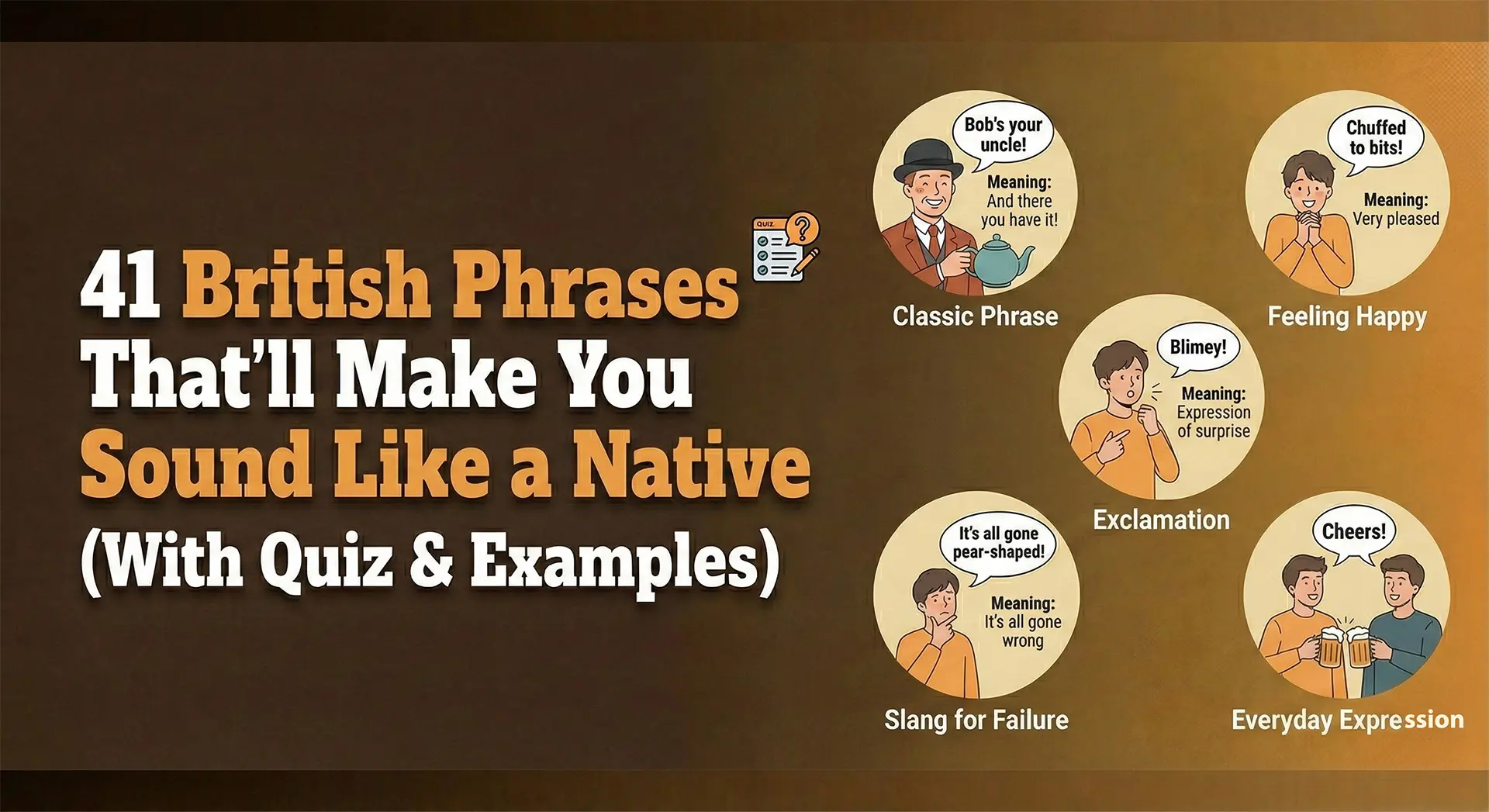
Have you ever watched a British show and wondered why people say “cheers” when they’re not drinking, or why someone would “pop to the loo” instead of just going to the bathroom? British people have this charming, witty way of expressing themselves that makes everyday conversations sound like poetry mixed with humor.
What makes British English truly unique isn’t just the accent—it’s the colorful British phrases woven into daily life. While American English keeps things straightforward, British expressions dance around meanings with politeness, understatement, and delightful sarcasm. Whether you’re planning to visit London, studying UK literature, or simply want to understand your favorite British YouTubers, mastering these phrases will transform your English.
In this guide, I’ll walk you through 41 authentic British expressions grouped by real-life situations. By the end, you’ll not only understand what Brits mean when they speak, but you’ll also impress everyone with your natural-sounding UK English. Ready to sound like you’ve just stepped out of a London café?
See also: British vs American English Quiz
🇬🇧 Why Learn British Phrases?
Learning British expressions isn’t just about memorizing quirky words—it’s about understanding a culture that values wit, politeness, and subtle communication. When you grasp these phrases, you unlock a deeper connection to British movies, music, literature, and everyday conversations.
Moreover, using authentic UK English phrases boosts your fluency and confidence. You’ll catch jokes faster, understand context better, and navigate conversations with ease. British humour, famous for its dryness and irony, becomes accessible once you know the language behind it.
Think of it this way: knowing British phrases is like having a secret decoder ring for British culture. You’ll not only understand what’s being said but also appreciate the clever wordplay and nuance behind everyday conversations. You might even find yourself slipping in a “blimey” or “knackered” naturally!
Whether you’re reading Harry Potter, watching The Crown, or chatting with a British friend online, these phrases will help you decode idioms, slang, and subtle cues that make native speakers sound so effortless. This is more than language—it’s a bridge into a rich cultural world.
🗂️ 41 British Phrases Categorized by Situation
Let me break down these expressions by context so you can actually use them in real life. Each category focuses on specific situations where you’ll hear Brits speaking naturally.
☕ Everyday Greetings & Small Talk
British people greet each other differently than Americans. These everyday British phrases help you sound friendly and natural from the moment you say hello.
| Phrase | Meaning | Example |
|---|---|---|
| You alright? | How are you? (casual greeting) | “You alright, mate? Haven’t seen you in ages!” |
| Cheers | Thanks / Goodbye / Toasting | “Cheers for helping me move yesterday!” |
| Fancy a cuppa? | Want a cup of tea? | “I’m putting the kettle on—fancy a cuppa?” |
| Lovely to see you | Nice to meet/see you | “Lovely to see you again, Sarah!” |
| Ta | Thanks (very casual) | “Ta for holding the door!” |
Cultural Note: “You alright?” sounds like a genuine question, but it’s actually just a greeting. A simple “yeah, you?” is the perfect response. Don’t start listing your problems—Brits will find that awkward!
Mini Action: Next time you greet someone, try saying “You alright?” with a friendly smile and see how natural it feels.
💬 Expressing Feelings & Emotions
British people express emotions differently than Americans. Instead of saying “I’m really happy,” they’ll use these colorful terms that add character to conversations.
| Phrase | Meaning | Example |
|---|---|---|
| I’m chuffed | I’m very pleased/happy | “I’m absolutely chuffed—I got the promotion!” |
| I’m gutted | I’m very disappointed | “I’m gutted that I missed the concert.” |
| I’m knackered | I’m exhausted | “After that 12-hour shift, I’m completely knackered.” |
| I’m gobsmacked | I’m shocked/amazed | “I was gobsmacked when she announced her engagement!” |
| I’m buzzing | I’m excited/thrilled | “I’m buzzing about the weekend trip!” |
Cultural Note: British people often understate emotions. So when a Brit says they’re “a bit annoyed,” they might actually be furious. Conversely, “chuffed” means genuinely delighted.
Mini Action: Replace “I’m tired” with “I’m knackered” this week and notice how much more expressive it sounds.
😏 British Humour & Sarcasm
Understanding British humor requires knowing these phrases. Dry wit and playful sarcasm define British conversational style, and these expressions capture that perfectly.
| Phrase | Meaning | Example |
|---|---|---|
| Not my cup of tea | Not my preference | “Horror movies? Not really my cup of tea, honestly.” |
| You’re having a laugh | You must be joking | “£50 for a sandwich? You’re having a laugh!” |
| Pull your socks up | Make more effort/improve | “If you want to pass, you need to pull your socks up.” |
| Taking the mickey | Making fun of someone | “Stop taking the mickey out of my accent!” |
| Wind someone up | Deliberately annoy/tease someone | “He’s just winding you up—don’t take it seriously.” |
Fun Fact: British sarcasm is so subtle that many non-Brits miss it entirely. Interestingly, a phrase like “that’s brilliant” could mean either genuine praise or complete sarcasm, depending on the tone.
Mini Action: Watch a British comedy show this week and count how many times you hear these phrases in action.
🏠 Daily Life & Common Situations
These British sayings pop up in everyday activities. From shopping to visiting friends, you’ll hear these expressions constantly in the UK.
| Phrase | Meaning | Example |
|---|---|---|
| Pop to the loo | Go to the bathroom | “I’ll just pop to the loo before we leave.” |
| Queue up | Stand in line | “We need to queue up for tickets.” |
| Bob’s your uncle | There you go/it’s done | “Just click save, and Bob’s your uncle!” |
| Give it a go | Try something | “I’ve never done pottery, but I’ll give it a go.” |
| Bits and bobs | Various small items | “I need to pick up some bits and bobs from the shop.” |
Cultural Value: British people take queuing seriously—it’s practically a national sport. Never skip a queue in Britain, or you’ll face disapproving stares and possibly a confrontation.
Mini Action: Use “Bob’s your uncle” next time you’re explaining something simple. It adds a fun, casual touch to instructions.
🌦️ Weather Talk — The British Obsession
Talking about weather isn’t just small talk in Britain—it’s a cultural phenomenon. These British phrases will help you join the national conversation.
| Phrase | Meaning | Example |
|---|---|---|
| It’s chucking it down | It’s raining heavily | “Don’t forget your brolly—it’s chucking it down!” |
| Bit nippy | A bit cold | “It’s a bit nippy this morning, isn’t it?” |
| Lovely day, isn’t it? | Nice weather (conversation starter) | “Lovely day, isn’t it? Perfect for a walk.” |
| Brass monkeys | Extremely cold | “It’s brass monkeys out there—wear layers!” |
| Dull and dreary | Cloudy and boring weather | “Another dull and dreary Tuesday, typical.” |
Fun Fact: British people discuss weather constantly because it genuinely changes every few hours. Moreover, weather talk serves as a safe, neutral conversation starter that never offends anyone.
Mini Action: Start your next casual conversation with a weather comment using one of these phrases. You’ll sound instantly British!
🤝 Agreement & Disagreement Phrases
British people express agreement and disagreement politely. These UK English phrases help you navigate conversations without being too direct or confrontational.
| Phrase | Meaning | Example |
|---|---|---|
| Spot on! | Exactly right | “Your analysis is spot on—well done!” |
| Fair enough | That’s reasonable/I accept that | “Fair enough, let’s try your approach instead.” |
| Not quite | Polite disagreement | “Not quite—I think there’s another factor to consider.” |
| I see what you mean | I understand your point | “I see what you mean, but have you considered…?” |
| Can’t complain | Things are okay | “How’s work?” “Can’t complain, really.” |
Cultural Note: British politeness means direct disagreement is rare. Instead of saying “you’re wrong,” a Brit will say “I’m not sure I entirely agree” or simply “interesting point.”
Mini Action: Practice softening your disagreements with phrases like “not quite” instead of blunt “no” this week.
🗣️ Modern British Slang & Street Talk
Younger Brits use these contemporary expressions in everyday conversation. This British slang keeps evolving, but these terms have staying power.
| Phrase | Meaning | Example |
|---|---|---|
| Mate | Friend (used for anyone) | “Alright, mate? How’s things?” |
| Dodgy | Suspicious/unreliable | “That website looks a bit dodgy to me.” |
| Sorted | Organized/solved | “Don’t worry, I’ve got the tickets sorted.” |
| Blimey | Expression of surprise | “Blimey! That was close!” |
| Proper | Very/really | “That meal was proper delicious!” |
| Gutted (repeat) | Very disappointed | “I’m proper gutted about missing the match.” |
| Cheeky | Playfully rude/impudent | “Fancy a cheeky pint after work?” |
Cultural Value: “Mate” is incredibly versatile—you can use it with friends, strangers, or even when you’re annoyed at someone. Additionally, “cheeky” has become a beloved word that can describe anything from a sneaky drink to playful behavior.
Mini Action: Try calling your friends “mate” casually and see how it changes the vibe of your conversations.
Learn more: Difficult But Cool English Words
🎩 Polite and Indirect British Expressions
British communication relies heavily on understatement and politeness. Therefore, understanding these British expressions helps you decode what people really mean.
| Phrase | Meaning | Example |
|---|---|---|
| I might have a look | Polite way of saying no | “Could you review this?” “I might have a look later.” (probably won’t) |
| That’s interesting | Polite disagreement | “That’s an interesting approach…” (I don’t agree) |
| With all due respect | I’m about to disagree | “With all due respect, I think there’s a better way.” |
| I hear what you’re saying | I understand but disagree | “I hear what you’re saying, but…” |
| Quite good | Actually means very good | “The film was quite good!” (means excellent) |
Fun Fact: British understatement is legendary. When a Brit says something is “not bad,” they might mean it’s absolutely brilliant. Conversely, “that’s a bit of a problem” could mean disaster.
Mini Action: Listen for these phrases in British media and practice identifying when they’re being polite versus direct.
💼 Workplace & Professional Phrases
British workplaces have their own language. These everyday British expressions help you navigate professional settings in the UK confidently.
| Phrase | Meaning | Example |
|---|---|---|
| Let’s crack on | Let’s get started/continue | “Right, let’s crack on with the presentation.” |
| I’ll give you a bell | I’ll call you | “I’ll give you a bell tomorrow to discuss details.” |
| Touch base | Check in/follow up | “Let’s touch base next week about the project.” |
| In the loop | Kept informed | “Please keep me in the loop on any updates.” |
| Action that | Take action on it | “Can you action that by Friday?” |
Cultural Note: British workplace culture values politeness and indirect communication. Therefore, understanding these phrases helps you grasp what colleagues actually expect from you.
Mini Action: Use “let’s crack on” in your next work meeting to sound proactive and engaged.
🕰️ Classic British Sayings & Idioms
These timeless British idioms have been around for generations. They capture British culture, history, and wisdom in memorable phrases.
| Phrase | Meaning | Example |
|---|---|---|
| Keep calm and carry on | Stay composed during difficulties | “The project’s delayed, but keep calm and carry on.” |
| Don’t get your knickers in a twist | Don’t get upset/worried | “It’s just a small mistake—don’t get your knickers in a twist!” |
| Once in a blue moon | Very rarely | “I only eat fast food once in a blue moon.” |
| It’s not rocket science | It’s not difficult | “Just follow the instructions—it’s not rocket science.” |
| The early bird catches the worm | Those who act first succeed | “I always shop early for Christmas—the early bird catches the worm.” |
Cultural Value: These classic sayings reflect British values like resilience, humor, and practicality. Moreover, they’ve become so embedded in culture that British people use them without thinking.
Mini Action: Pick one classic phrase and use it naturally in conversation this week. Notice how it adds personality to your speech.
📚 How to Use These British Phrases Naturally
Now that you’ve learned these expressions, how do you actually incorporate them into your speech? Here are practical tips to help you sound like a native British speaker without forcing it.
Start Small: Don’t try using all 41 phrases at once. Instead, choose 2-3 favorites and practice them in relevant situations. For example, start with “you alright?” as a greeting and “cheers” for thank you.
Watch British Media: Immerse yourself in British shows like The Crown, Fleabag, or The Great British Bake Off. Additionally, YouTube channels by British creators provide endless examples of natural speech patterns. Listen for context clues about when phrases are appropriate.
Practice Context: Each phrase fits specific situations. You wouldn’t say “I’m knackered” in a formal business meeting, just like you wouldn’t say “let’s touch base” with your friends at the pub. Therefore, pay attention to the formality level of each expression.
Mimic the Tone: British communication relies heavily on tone. A phrase like “that’s interesting” can mean genuine interest or polite disagreement depending on how you say it. Consequently, practice the subtle vocal variations that convey meaning.
Don’t Overdo It: Using too many British phrases if you’re not British can sound forced or unnatural. However, sprinkling a few expressions into your vocabulary shows cultural awareness and language enthusiasm.
Get Feedback: If you have British friends or colleagues, ask them if your usage sounds natural. Most Brits will appreciate your effort to learn their expressions and offer helpful guidance.
Also check: Travel Vocabulary Words to expand your English for international trips
📝 British Phrases Quiz
Test your knowledge of British expressions including “chuffed,” “dodgy,” “knackered,” “Bob’s your uncle,” “taking the mickey,” and more. Get instant feedback on each answer!
🧩 Conclusion
Learning British phrases transforms your English from textbook-correct to naturally fluent. These 41 expressions cover everything from casual greetings to professional settings, giving you the tools to understand and participate in authentic British conversations.
Remember, language learning is about connection, not perfection. Therefore, don’t worry about sounding 100% British—focus on understanding these phrases so you can enjoy British culture more deeply. Whether you’re watching British films, traveling to the UK, or chatting with British friends online, these expressions will make conversations richer and more meaningful.
This week, I challenge you to pick 2-3 phrases from this list and actually use them. Start with simple ones like “cheers” or “you alright?” and notice how they feel on your tongue. Language becomes yours when you speak it, not just when you read about it.
Ready to Take Your English Further?
Join our vibrant community of English learners who are mastering real-world expressions daily:
👉 Join our Telegram Channel for daily British phrases and pronunciation tips
📧 Subscribe to our free English newsletter for weekly lessons delivered to your inbox
Frequently Asked Questions ?
In UK slang, "What are you saying?" means "What's up?" or "How are you?" It's a casual greeting used by younger Brits, especially in urban areas. You might also hear "Wagwan" (from Jamaican Patois) used similarly. Other common greetings include "You alright?" and "Alright, mate?"
British people say "mate" instead of "dude." This versatile term works for friends, acquaintances, and even strangers. You'll also hear "lad" (for young men), "bruv" (brother, used in urban areas), or "geezer" (informal term for a man). "Mate" remains the most universal equivalent to "dude" across all regions and age groups.
British people use several affectionate terms instead of "babe." Common ones include "love" or "luv" (used by anyone, even strangers in shops), "darling" (slightly more formal), "pet" (especially in Northern England), "duck" or "ducky" (in some regions), and "sweetheart." Younger couples might use "babe" too, but traditional British terms feel more authentic and culturally rooted.
⚡ Continue Learning
Learn English- 75 English Phrases for Daily Life: Speak Like a Native Every Day
- Learn English with Movies: 30-Day Challenge to Improve Fast
- Business English Phrases for Professional Emails: Essential Guide
- 5 Mistakes to avoid when Asking Questions in English
- Difficult But Cool English Words with Meanings (Learn & Impress!)
